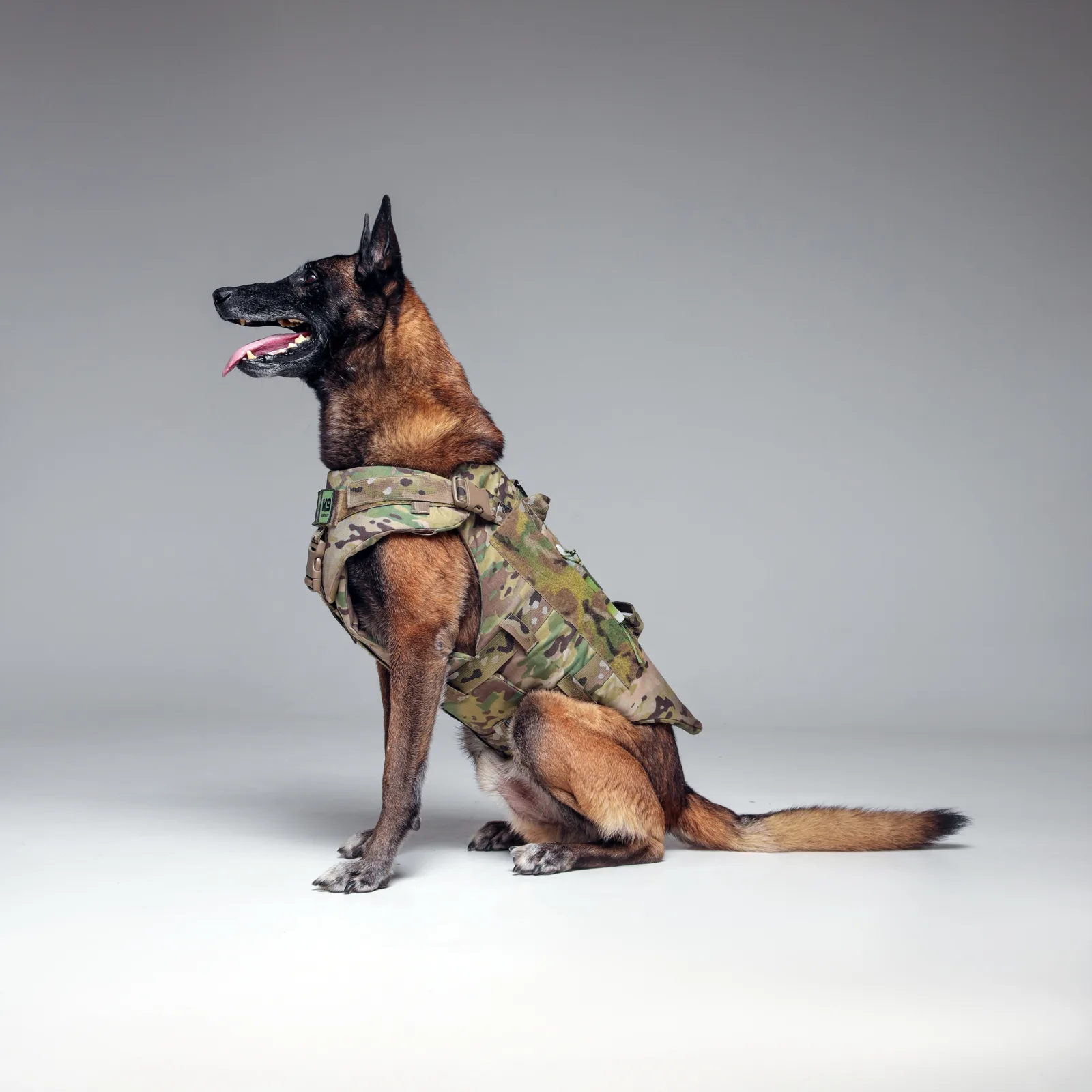
K9 first aid: what should be in a first aid kit for a service dog
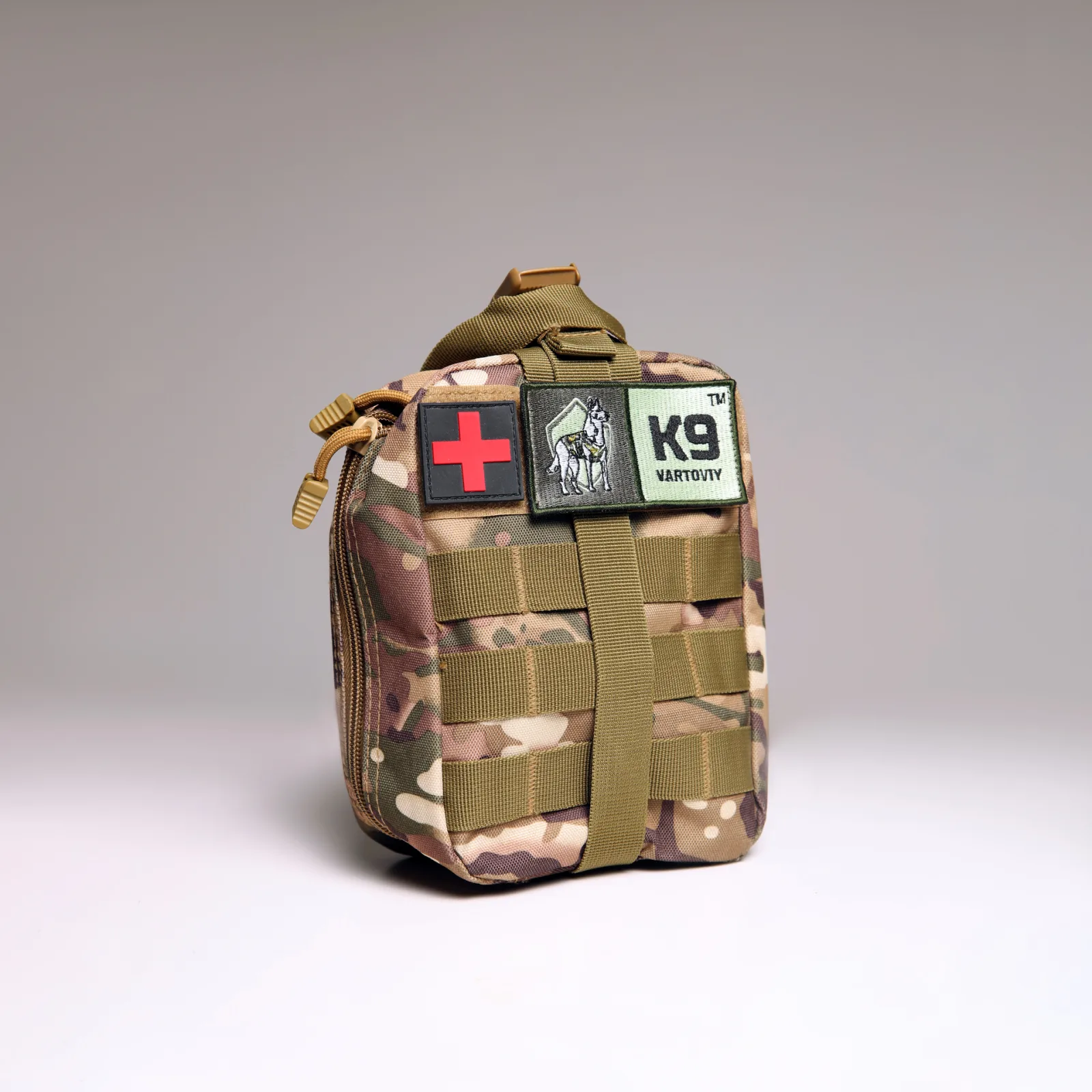
A first-aid kit for a service dog is a compact pouch containing supplies for stopping bleeding, treating wounds, and safely managing the animal in a stressful situation until it reaches a veterinarian.
Minimum essential kit: tourniquet for limbs, sterile bandages, occlusive patch for penetrating chest wounds, compression bandage, antiseptic, syringe, thermal blanket, and soft muzzle (an injured dog will bite even its owner as a reflex). The “Vartoviy K9” tactical first-aid kit contains all of these items in a single pouch along with the “Omega Tourniquet.” The first-aid kit is kept in three places at the same time: on the dog’s harness, with the handler, and in the vehicle. Check the expiration dates and the integrity of the packaging once every 6 months. Below is a complete list of the contents of the basic and advanced first-aid kits, common on-duty injuries, and step-by-step protocols for stabilizing the dog before transport to the clinic.Why Dogs Need Their Own First-Aid Kit, Not a Human One
A service dog on patrol, a search mission, or an evacuation operation risks getting injured in a place where there is no veterinarian nearby. The first 5–10 minutes after an injury are critical, and a human first-aid kit isn’t suitable for this: it doesn’t include a soft muzzle, the tourniquet is designed for a human limb, and the medications are dosed for humans.
The golden rule: Always put a muzzle on an injured dog before handling it. Pain and shock can cause even the most well-behaved dog to bite reflexively. The soft muzzle included in the first-aid kit allows you to secure the dog’s jaws in seconds and safely treat the wound.
K9 Basic First Aid Kit: Minimum Set
This basic kit covers 80% of common injuries—cuts, scrapes, minor bleeding, and heat exhaustion. This is exactly what’s included in the “Vartoviy K9” tactical first-aid kit:
- Soft muzzle—to control the dog and protect the rescuer from bites;
- “Omega Tourniquet”—to stop severe bleeding from the paws;
The pouch is easy to carry on a dog or handler and can be attached to the MOLLE system—for example, on a tactical harness or a K9 body armor vest. For more information on how it attaches, see the guide on the MOLLE system for tactical harnesses.
Expanded First Aid Kit for Field Deployments
For extended field trips, combat missions, and operations far from a clinic, the basic kit is supplemented. The expanded kit is designed to stabilize the dog for one to two hours until evacuation:
- a second tourniquet (in case of injuries to two limbs);
- a larger supply of sterile bandages and gauze pads;
- saline solution in vials—for washing wounds and eyes;
Important: Do not give your dog human pain relievers (ibuprofen, acetaminophen)—they are toxic to animals. Any medications in your first-aid kit must be approved by your veterinarian, with the dosage specified based on your dog’s weight.
Common Work-Related Injuries and What to Do
| Injury | First Step | From the first-aid kit |
|---|---|---|
| Bleeding from a paw | Apply direct pressure, then apply a tourniquet above the wound | Tourniquet, sterile bandage |
| Deep cut to the torso | Tight packing with a sterile bandage, compression bandage | Sterile bandage, compression bandage |
| Penetrating chest wound | Sealing with an occlusive patch, emergency evacuation | Occlusive dressing |
| Overheating (heatstroke) | Shade, cool water on the paws and belly, hydration | Syringe, water |
| Cut on paw pads | Rinsing, antiseptic, pressure bandage | Antiseptic, bandage |
| Shock, blood loss | Warming, rest, rapid transport | Thermal blanket |
A particular danger in the field is bites from snakes and dangerous animals.
Do not apply a tourniquet to a snake bite or cut open the wound: restrain the dog, limit movement of the affected limb, and take it to the clinic immediately. For more details, see the article on protecting dogs from snake and animal bites.Algorithm: Stopping Heavy Bleeding
- Put a soft muzzle on the dog.
- Apply pressure to the wound with your palm through a sterile bandage for 1–2 minutes.
- If blood is seeping through and the wound is on a limb, apply an “Omega Tourniquet” above the wound and note the time it was applied.
- For wounds on the torso where a tourniquet cannot be applied, use tight packing with a sterile bandage and a compression bandage.
Apply a tourniquet only to the legs and for no longer than the veterinarian has permitted—be sure to tell the veterinarian when you applied it. For small breeds, a standard tourniquet may be too large: keep a narrow elastic bandage in your first-aid kit to use as a makeshift tourniquet for them.
Evacuating an Injured Dog
If a dog cannot walk, it must be carried out safely. For dogs weighing up to 25–30 kg, leg support straps are suitable—the Hoisting system, featuring EVA cuffs and quick-release buckles, allows you to support the animal while moving.
For severe injuries and immobilization, veterinary stretchers made of durable PVC (750×1250 mm) with six reinforced handles are used—they are easy to carry by two or four people.A first-aid kit logically falls under medical equipment along with stretchers—this entire category is listed in the “Medical” section, while evacuation equipment is listed in the “Carrying” section.
How to Store and Maintain a First-Aid Kit
- Keep the first-aid kit in three places: on the dog, with the handler, and in the car.
Frequently Asked Questions
What should be in a first-aid kit for a service dog?
At a minimum: a soft muzzle, a tourniquet for limbs, sterile bandages, an occlusive patch, a compression bandage, an antiseptic, a syringe, a thermal blanket, gloves, scissors, and tweezers. All of these items are included in the “Vartoviy K9” tactical first-aid kit in a single pouch.
How do you stop bleeding in a dog in the field?
First, put a muzzle on the dog. Apply pressure to the wound with your palm through a sterile bandage. If the bleeding doesn’t stop and it’s a paw, apply a tourniquet above the wound and note the time. For wounds on the torso, pack the wound with a sterile bandage and apply a compression bandage, then take the dog to a veterinarian immediately.
Why is there a muzzle in the first-aid kit?
Due to pain and shock, an injured dog may bite reflexively, even its own handler. A soft muzzle allows you to safely secure the dog’s jaws and treat the wound without risking a bite.
Can I give my dog human pain relievers from the medicine cabinet?
No. Ibuprofen, acetaminophen, and aspirin are toxic to dogs. Any medication from your first-aid kit must be approved by your veterinarian, with the dosage specifically prescribed based on your dog’s weight.
How often should you check the K9 first-aid kit?
Every 6 months, check the expiration dates of the bandages, the integrity of the packaging, and the functionality of the tourniquet. Replace essential supplies (sterile bandages, occlusive patches, gloves) at least once a year.
How do you carry an injured dog if it can’t walk?
For dogs weighing up to 25–30 kg, use leg support straps. For serious injuries, use a PVC veterinary stretcher with six handles; it’s easiest to carry with two or four people.
This material was prepared by the “Vartoviy K9” team—a Ukrainian manufacturer of equipment for service dogs. Orders and consultations: +38 (067) 465-68-64. This is informational material and does not replace an in-person examination by a veterinarian.