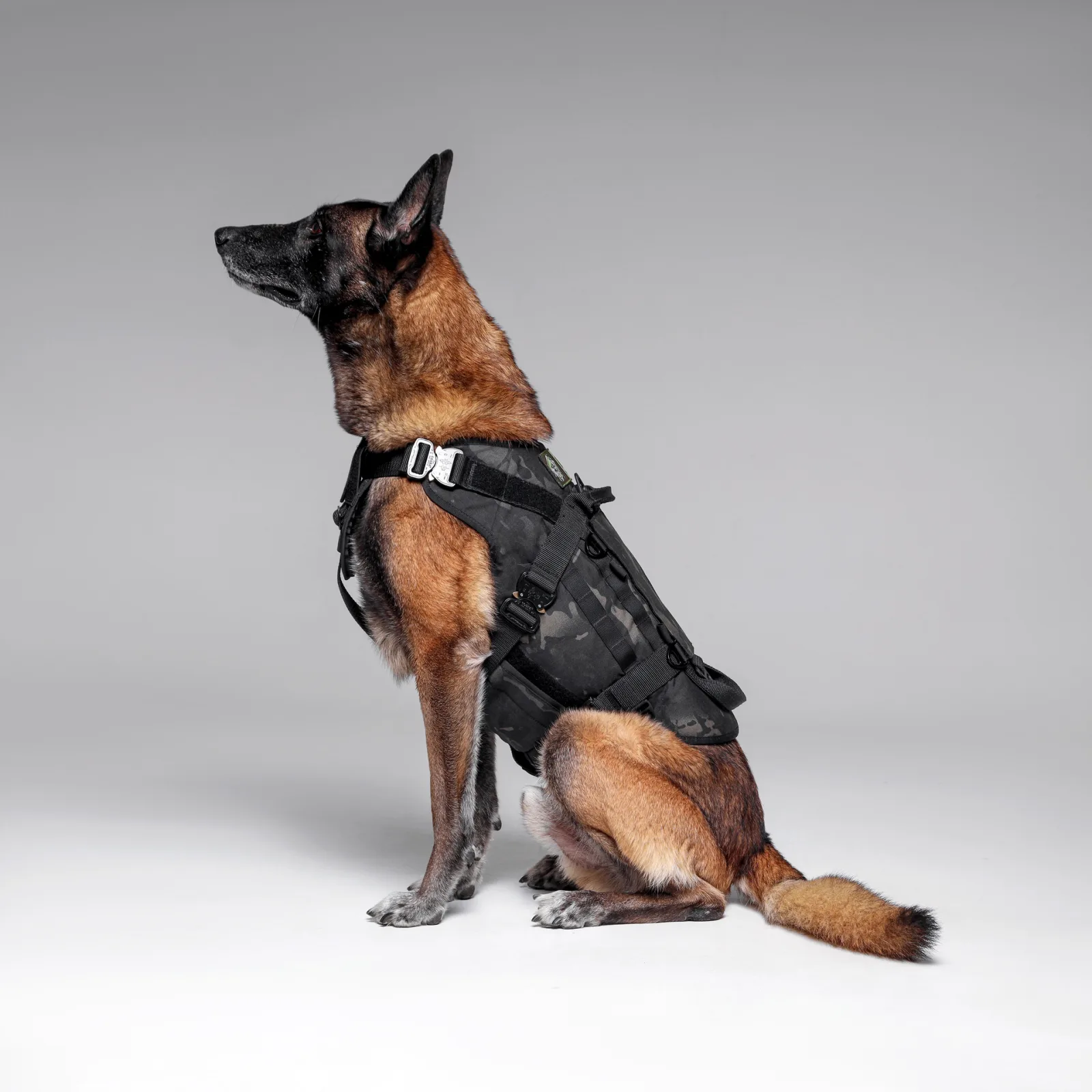
Protecting your dog from snake and wild animal bites
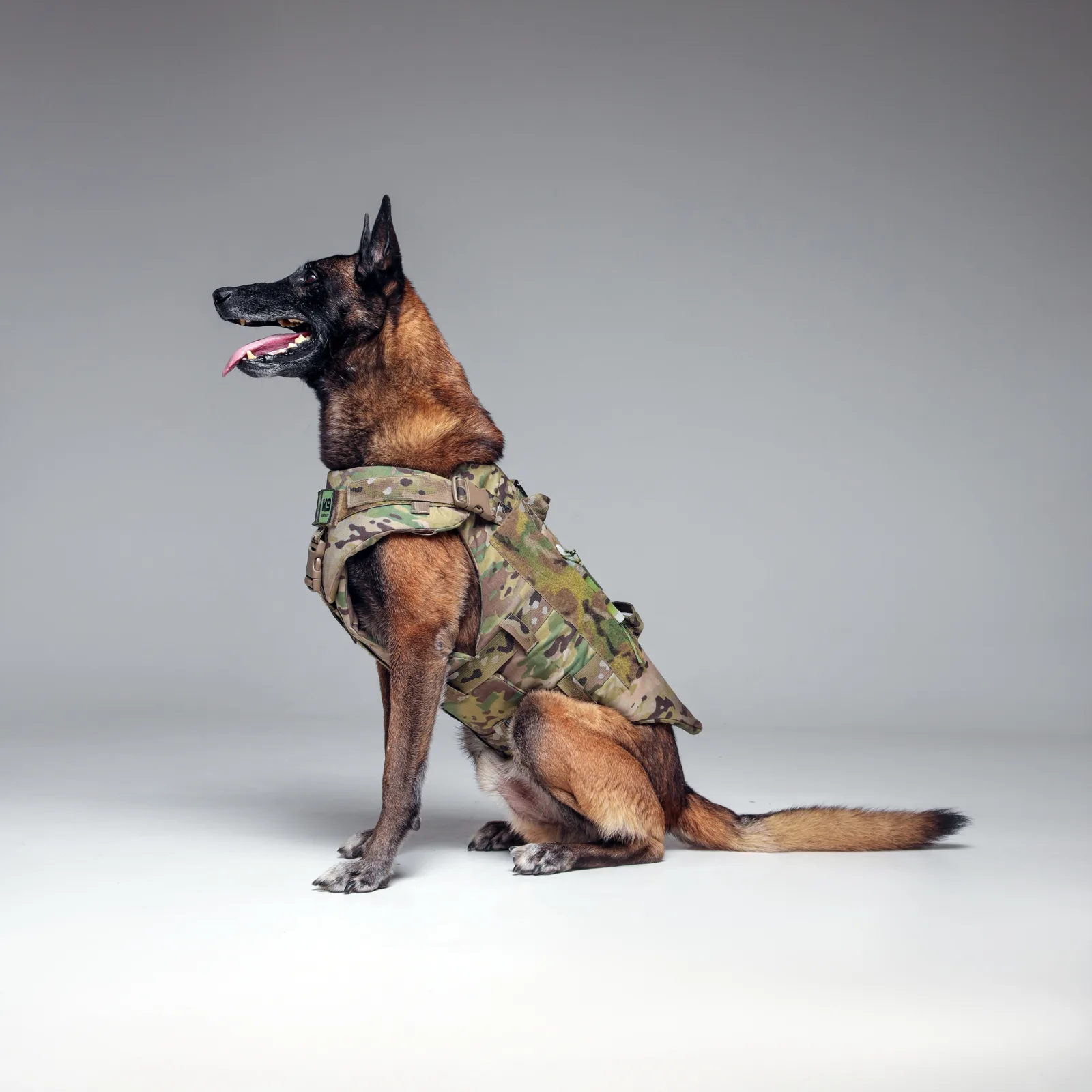
A bullet is not the only danger for a service dog in the field. On search-and-rescue outings, in the forest or in unscouted buildings, the dog faces snake bites, the aggression of wild and stray animals, sharp debris underfoot and infections from rodents. Layered K9 protection is built on the principle "physical barrier + medical readiness + behavioral training." Vartoviy K9 body armor (UHMWPE to DSTU 8782:2018, Class 1) covers the chest, back and sides and has an optional removable neck module — the most vulnerable zone in an animal attack. The paws, muzzle and limb skin are protected by separate solutions, and bites are supplemented with prevention: vaccinations, a tactical first-aid kit with an antivenom block and a "snake avoidance" course. Below is a practical breakdown of each risk zone and exactly how to cover it.
Which zones of the dog are most vulnerable
A dog's anatomy dictates a different protection logic than a human's. The torso (chest, back, sides) is well covered by body armor or a tactical vest, but the body accounts for only part of the threats. The most risks are where the gear usually doesn't reach.
| Zone | Main threats | What covers it |
|---|---|---|
| Paws and pads | Glass, debris, nails, hot asphalt, ice, small snakes, reagents | Tactical K9 booties |
| Neck (carotid artery, trachea) | Bites from other animals, a bite during apprehension | Removable neck module of the armor, protective collar |
| Muzzle and nose | Snake bite while sniffing grass, animal aggression | Training mesh mask, avoidance course |
| Torso (chest, back, sides) | Bullets, fragments, impacts, bites | Body armor or tactical vest |
Body armor covers the torso, but the rest of the body needs targeted solutions. So "protection from animals" is not a single product but a system.
Paw protection: tactical K9 booties
K9 booties are sturdy "boots" of nylon or leather with a reinforced non-slip sole. In the field they save the dog from many injuries that put it out of action faster than anything else.
- Sharp debris, glass, nails, metal shavings during sweeps
- Hot asphalt: above 60 °C it injures the pads in 30 seconds
- Snow and ice on winter outings, reagent buildup
- Bites from small reptiles in the grass (the muzzle, alas, stays exposed)
- Chemicals: anti-icer, fuel, technical fluids
The dog is accustomed to booties gradually: 5 minutes on a mat at home, then 15 minutes in the yard, then working outings. Full habituation is 7–10 days. Choose the size by paw circumference so the sole doesn't rotate.
Neck protection: module and collar
The neck is the most dangerous target in an attack by dogs, foxes or raccoons: a single deep bite of the carotid artery or trachea is fatal. Vartoviy K9 body armor provides an optional removable neck module that attaches to the main product and covers this zone without excess weight when there's no threat.
If the body armor isn't worn (training, patrol in heat), a separate protective collar is used — wide (4–6 cm), dense with a soft inner lining so it doesn't chafe during prolonged wear. A spiked collar with spikes outward is used selectively, to deter aggressive animals in dangerous regions — it's a harsh solution, so choose it deliberately.
Protection from snakes in Ukraine
In Ukraine the danger to dogs comes mainly from vipers: the common viper across the whole territory and the steppe viper in the south and east. The grass snake is practically harmless. In the southern steppes the more venomous steppe viper, with a more severe clinical course, is occasionally found. Most bites land on the muzzle and paws — the dog explores the grass with its nose.
Prevention works better than treatment:
- High tactical booties for work in tall grass
- A training mesh mask on the muzzle (accustom gradually, not for prolonged wear)
- A "snake avoidance" course: the dog learns not to sniff unusual objects and to back off at a hiss
- Route discipline: avoid stones, burrows and rubble in the viper-active season (April–September)
If a bite has occurred — minimize the dog's movement (movement spreads the venom), don't apply a tourniquet to the bite site, cool the zone and take it to a vet. Antivenom serum is prescribed only by a vet: keeping and administering it yourself is dangerous.
Protection from bites of other animals
For apprehending aggressive animals, protection-and-guard service training and clearing infested premises, special bite suits with impact-resistant padding are used. This is a separate class of gear for specific tasks, not for combat outings with bullet risks.
For daily work in conditions where animal encounters are possible, it's more rational to combine a tactical vest (covers the torso, compatible with evacuation straps) with neck protection and booties. In zones of real fire risk, the torso is covered by ballistic body armor with anti-fragment protection to STANAG 2920.
Ballistic standards: DSTU 8782:2018 and NIJ
Bite protection and bullet protection are different tasks, but confusion in standards happens often. Here it's important to distinguish two designations:
| Standard | What it is | Relation to our products |
|---|---|---|
| DSTU 8782:2018 | Ukrainian body-armor standard | Vartoviy K9 body armor is certified to it, Class 1 (stops 9×18 mm PM/APS and 9×19 mm Luger) |
| NIJ (USA) | US standard; level IIIA is roughly comparable to pistol threats | An educational comparison; our product has no NIJ class — it's to DSTU |
NIJ is a real international standard, useful for understanding the protection level, but it's not the certificate of our body armor. Vartoviy K9 is made of UHMWPE and tested to DSTU 8782:2018 (Class 1), with anti-fragment protection to STANAG 2920 (V50) and a Cordura 500D outer layer. The product is sewn to the dog's size by measurements from an individual table.
Immunization: an invisible level of protection
Many threats from animals and rodents are not mechanical but infectious. Regular vaccinations cover exactly this level:
- Rabies — annually, mandatory; critical with any contact with wild animals
- Leptospirosis — annually; carriers are rodents and contaminated water
- Parvovirus/distemper — on the puppy schedule with subsequent revaccinations
- Borreliosis (Lyme disease) — tick treatment in at-risk regions
Complete your outing kit. The Vartoviy K9 tactical first-aid kit has a soft muzzle (a dog in shock may bite even its owner), an Omega tourniquet, sterile bandages, an occlusive patch, a compression bandage, a syringe and a thermal blanket — a basic set to stabilize the dog until the vet. How to use it — in the article on the K9 first-aid kit.
FAQ
Does body armor protect a dog from snake and animal bites?
Partly. Vartoviy K9 body armor covers the chest, back and sides, and with the optional neck module — also the most vulnerable zone in an animal attack. But the paws and muzzle stay exposed, so against snakes and small threats you need booties, a training mask and an avoidance course.
Which snakes in Ukraine are dangerous to dogs?
Primarily the common viper (across the whole country) and the steppe viper (south, east). The grass snake is not venomous. Most bites land on the muzzle and paws, since the dog sniffs the grass — that's why booties and behavioral training are critical.
What to do for a snake bite?
Limit the dog's movement, don't apply a tourniquet to the bite site, cool the zone and take it to a vet immediately. Antivenom serum is administered only by a specialist. Keeping it "in reserve" at home and injecting it yourself is dangerous.
What protection standard does Vartoviy K9 body armor have?
The body armor is certified to the Ukrainian standard DSTU 8782:2018 (Class 1): it stops 9×18 mm PM/APS and 9×19 mm Luger bullets and has anti-fragment protection to STANAG 2920. It's not an NIJ class — NIJ is only a benchmark for comparing protection levels.
Can the body armor be ordered with a neck module?
Yes. The neck module is an optional removable element of the body armor that attaches to the main product. Everything is sewn to the dog's size by measurements; measurement details — in the guide "How to measure a dog for body armor."
How fast can a dog be accustomed to booties and muzzle protection?
Gradually: booties — from 5 minutes on a mat to working outings within 7–10 days; the mesh mask is introduced in short sessions with reward. Forcing the gear on isn't advisable — the dog will start pulling it off.
This material was prepared by the Vartoviy K9 team — a Ukrainian maker of tactical and rescue gear for service dogs. Have questions about a kit for your tasks? Contact us via the contacts page.