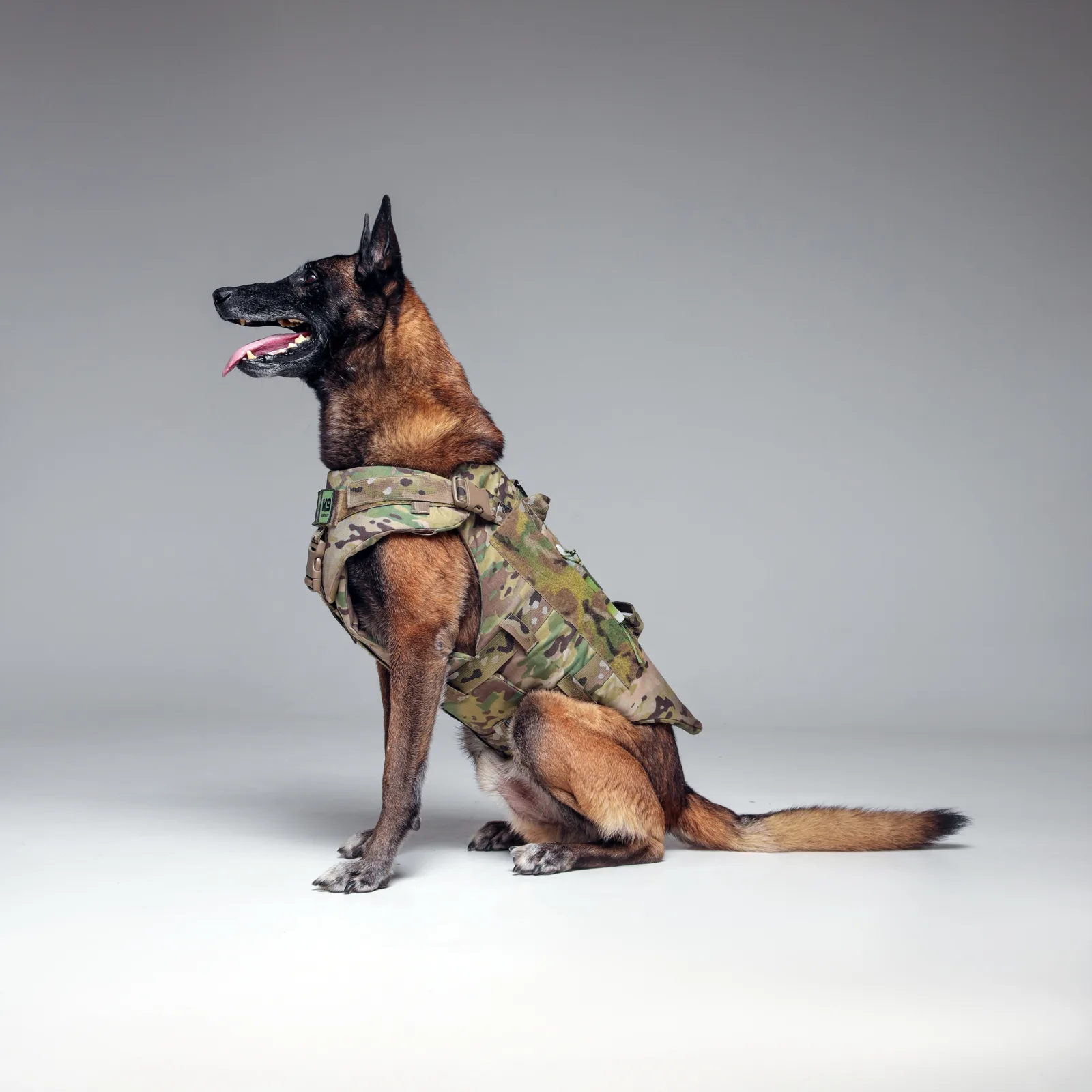
MOLLE system: a complete guide to the tactical harness
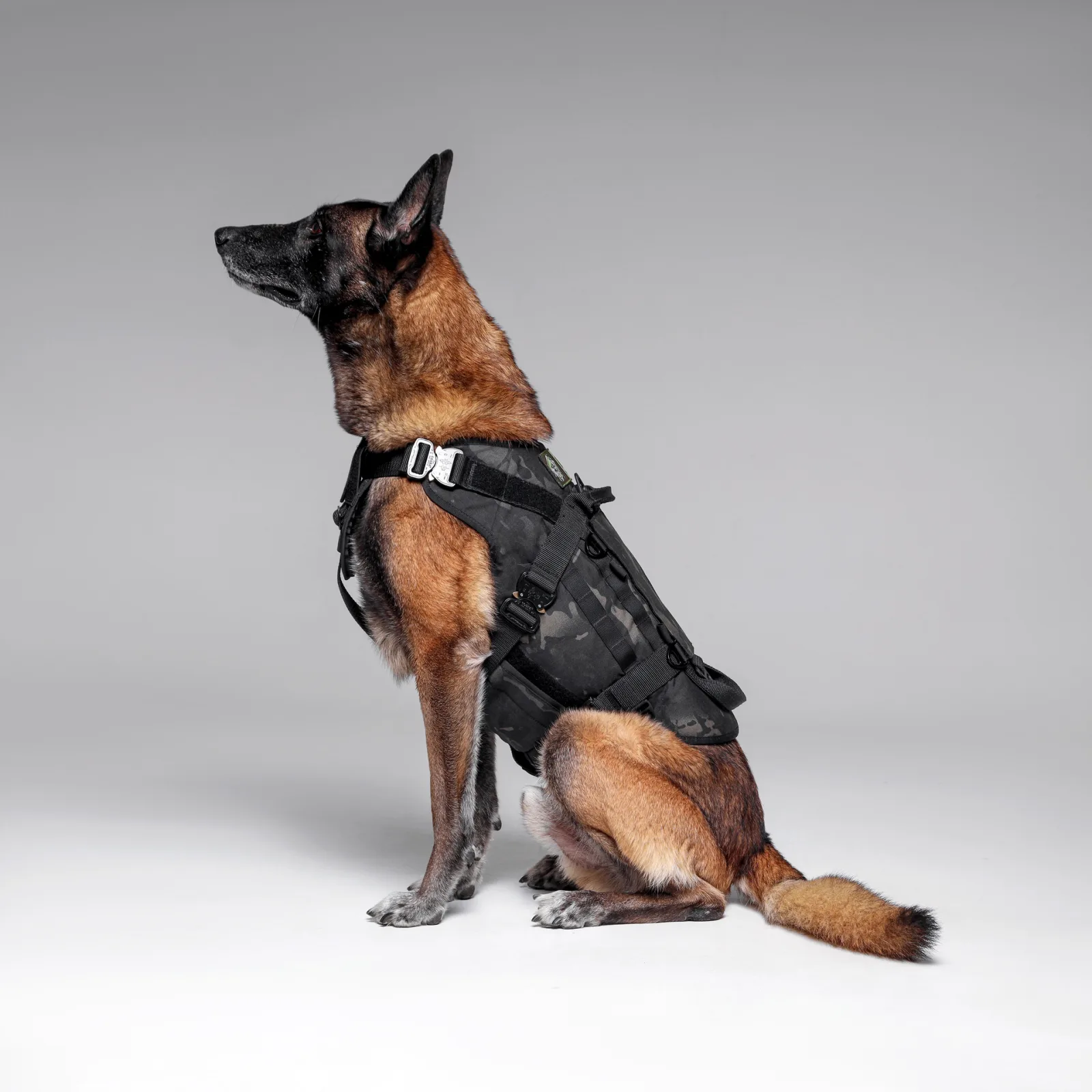
MOLLE (Modular Lightweight Load-carrying Equipment) is a modular equipment attachment system based on horizontal PALS straps, which the U.S. Army standardized in the late 1990s and widely adopted in the early 2000s. Today, it is the global standard for tactical gear for personnel and service dogs.
The “Vartoviy K9” tactical harness features 6 rows of MOLLE straps made of durable 500D Cordura fabric, so each product can be adapted for a specific task—patrolling, search and rescue, carrying a first-aid kit, or light signaling equipment. The pouches are secured by weaving them through the straps (rather than using carabiners), ensuring that the harness stays firmly in place and does not come loose while running or jumping. In this guide, we explain how the MOLLE harness works, what exactly can be attached to the K9 harness, how to distribute the weight properly (no more than 10% of the dog’s weight), and the 5 mistakes beginners tend to make. All “Vartoviy K9” gear is sewn in Ukraine using Duraflex hardware and ITW Nexus half-rings rated for loads up to 800 kgf.What Are MOLLE and PALS in Simple Terms
These two terms are often confused. MOLLE is the general name for a modular gear system. PALS (Pouch Attachment Ladder System) is actually that “ladder” made of horizontal straps to which pouches are attached. When people say “MOLLE webbing,” they usually mean the PALS straps.
On the “Vartoviy K9” tactical harness, the PALS panel consists of horizontal webbing strips 25 mm (1 inch) wide, sewn onto a rigid base lined with 3D Mesh and EVA. There is a standard spacing of about 25 mm between adjacent straps, and the seams themselves divide the straps into “cells” of approximately 38 mm. Thanks to this, any compatible pouch fits into the panel without any slack.
How the MOLLE mesh is constructed on the K9 harness
The harness has 6 rows of MOLLE slings made of 500D Cordura fabric—an abrasion- and tear-resistant material designed to withstand field use. The straps are positioned on the sides and on the back panel, allowing the load to be distributed symmetrically.
The pouch is attached using a weave method:
- Thread the pouch’s attachment strap under the first strap of the harness.
It is this weaving pattern every few slings that makes the harness a single, integrated unit with the harness. This is the key difference between the MOLLE method and carabiner attachments, which may seem faster but result in slack.
What Can Be Attached to a Tactical Harness
It is appropriate to attach lightweight, securely fastened equipment to the MOLLE harness loops. Suggested list:
| Pouch / module | Purpose | Approximate weight |
|---|---|---|
| First Aid Kit Pouch | Tourniquet, sterile bandage, scissors | 120–250 g |
| Water bottle / water canteen | 250–500 ml of water per work session | 300–550 g |
| 3M reflective tape | Visibility in the dark | 10–30 g |
| GPS tracker | Mountable module ~50×30 mm | 30–80 g |
| Beacon (chemlight or LED) | Night search, marking | 20–60 g |
| Velcro ID patches | Identification: “K9,” “Police,” “ZSU” | 5–15 g |
The harness’s transport handle remains free for quickly lifting the dog or securing it—it should not be covered by pouches.
How to Distribute Weight Properly
The total weight of the harness should not exceed 10% of the dog’s body weight. For a Belgian Shepherd (Malinois) weighing 25 kg, this means a maximum of about 2.5 kg, including the harness itself.
- Symmetry. Attach equal weight to the left and right sides; otherwise, the harness will slip to one side and rub against the dog’s paw.
For more details on balance and specific placement areas, see the separate article “The MOLLE System for the K9: How to Properly Position Your Gear.”
5 Mistakes Beginners Make When Using the MOLLE
- “Every-other-strap” mounting. The end result is wobbly—always weave through 2–3 straps in a row.
What Not to Attach to a Dog Harness
Avoid sharp objects without protective covers (knives, multi-tools), glass flasks, and heavy metal carabiners “just in case.” For dog work, the rule is simple: minimal metal, maximum lightweight polymers and nylon. Do not attach any third-party items to the MOLLE that pose a risk of overheating or a chemical reaction—such as batteries or power banks—as they can be dangerous if struck or compressed.
Why Hardware Is Just as Important as Fabric
The MOLLE field holds the load, but the overall reliability of the harness is determined by its heavy-duty hardware. The “Vartoviy K9” tactical harness features Duraflex buckles and ITW Nexus half-rings with a working load of up to 800 kgf, and the carrying handle is stitched with multiple rows of stitching. This allows you not only to carry equipment but also to safely lift or evacuate the dog. The harness is available in sizes S–XL for dogs weighing 18–60 kg.
If you plan to combine the mount with evacuation equipment, be sure to check for compatibility between the carrying and evacuation categories, as well as the tactical first-aid kit, which can be conveniently attached to the MOLLE panel.
Frequently Asked Questions
How many rows of MOLLE are there on the “Vartoviy K9” tactical sling?
Six rows of MOLLE straps made of Cordura 500D fabric, located on the sides and the back platform. This is enough to carry a first-aid kit, a water bottle, an GPS tracker, a beacon, and ID patches at the same time, provided the weight limit is not exceeded.
How much gear can be carried on the K9 harness?
The total weight of the load, including the harness, should not exceed 10% of the dog’s weight. For a 25-kg dog, this is approximately 2.5 kg. Overloading accelerates fatigue and increases the risk of joint injuries.
Can pouches be attached with carabiners instead of weaving?
We don’t recommend it. Carabiner clips may seem faster, but the pouch will come loose while running and jumping. The correct method is to weave the pouch’s attachment strap through 2–3 consecutive PALS loops and secure it with a snap.
How does MOLLE differ from PALS?
MOLLE is the general term for a modular gear system. PALS is a specific “ladder” made of 25-mm-wide horizontal straps to which pouches are actually attached. In everyday use, both terms are used interchangeably.
What hardware is used in the harness?
Duraflex buckles and ITW Nexus half-rings with a working load of up to 800 kgf, a reinforced carrying handle, Cordura 500D fabric, and a 3D Mesh + EVA lining. The harness is made in Ukraine and is available in sizes S–XL for dogs weighing 18–60 kg.
Can a first-aid kit be attached to a tactical harness?
Yes, the “Vartoviy K9” tactical first-aid kit attaches to the MOLLE panel. Position it closer to your shoulders and symmetrically with the opposite magazine pouch to keep the harness from tilting.
Not sure which configuration is right for your specific operation? Let us know exactly what you need to carry, and we’ll recommend the best layout for your pouches. You can find our contact information on the “Contacts” page, and the terms for free shipping within Ukraine on the “Shipping” page.