Replacing ballistic panels: when and how
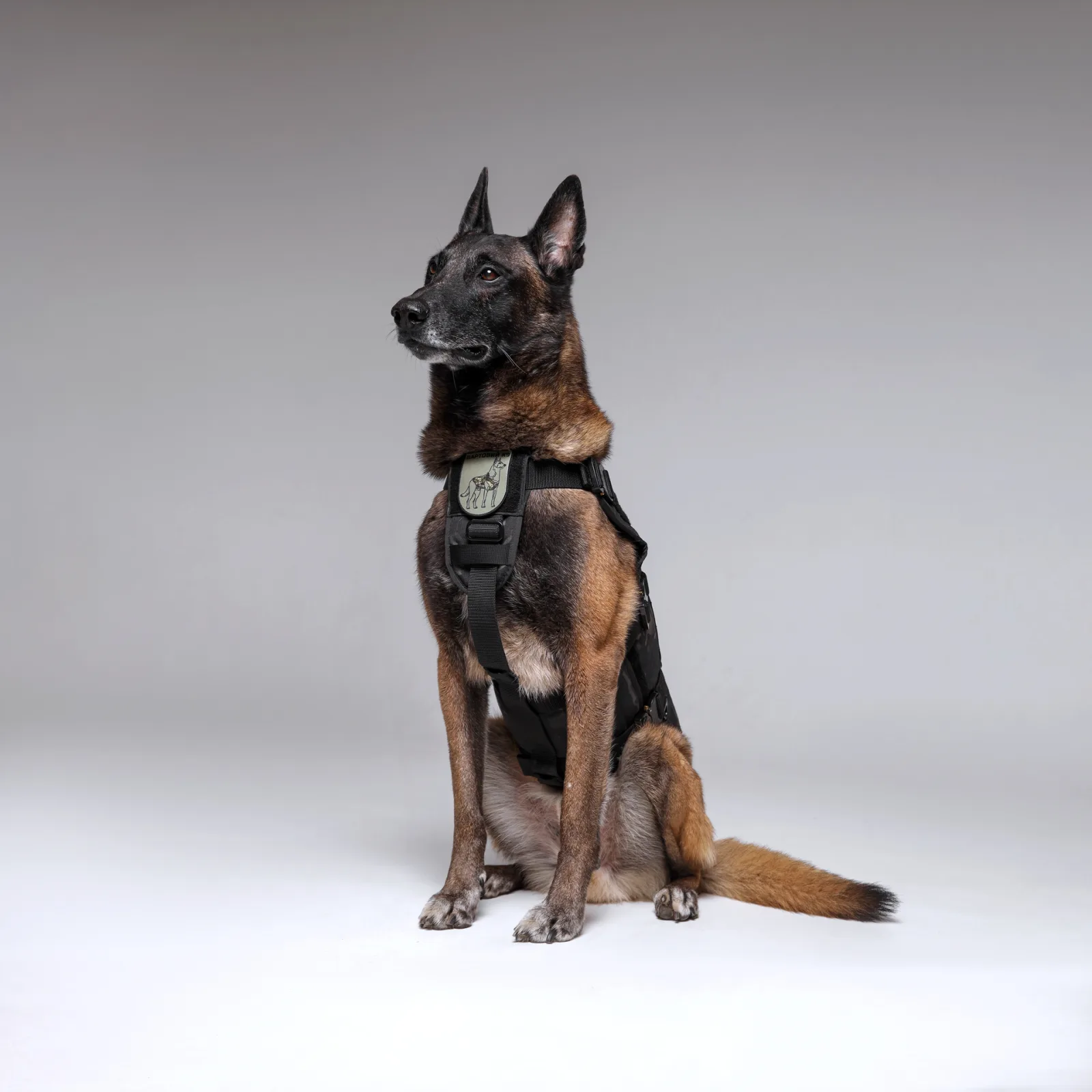
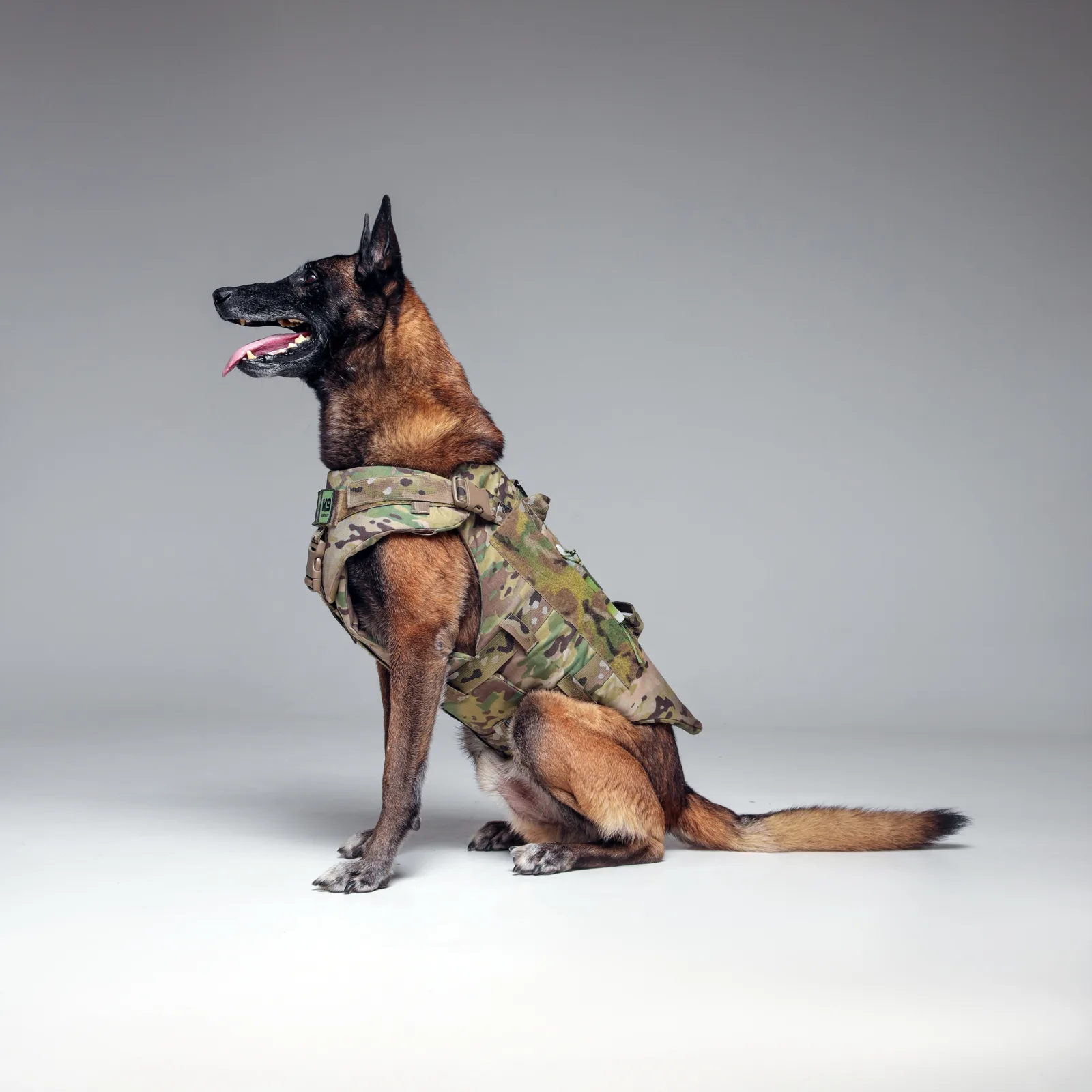
The ballistic panel is the "heart" of dog body armor, while the outer cover of Cordura 500D is only its shell. In Vartoviy K9 body armor the panel is made of UHMWPE (ultra-high-molecular-weight polyethylene) and certified to the Ukrainian standard DSTU 8782:2018, Class 1; it has a 3-year warranty, and the stitching and hardware — 12 months. The panel is replaced in two cases: when it has done its job (stopped a bullet or fragment) or when it has taken damage that reduces protection — laminate delamination, a non-disappearing dent, thermal deformation, a deep cut. Unlike aramid (Kevlar) panels, UHMWPE is hydrophobic and ages more slowly, so it has no rigid "switch-off date" — you go by the module's actual condition, not just the manufacturing date. In this guide we cover when replacement is mandatory, how to do it step by step, what to do with the old panel and what documents should come with the new one.
Why the panel is a replaceable part and the cover is not
Vartoviy K9 body armor is a modular system of two fundamentally different parts. Once you understand their roles, you'll know exactly what to change and when.
| Part | Material | Job | When to replace |
|---|---|---|---|
| Outer cover | Cordura 500D, MOLLE, hardware | hold the panel, carry accessories, protect from dirt | fabric wear, broken hardware, worn webbing |
| Ballistic panel | UHMWPE to DSTU 8782:2018 | stop 9×18 mm PM/APS, 9×19 mm Luger bullets and fragments | activation, damage, loss of properties |
The cover is a consumable that can fully wear out and be replaced while the panel is still serviceable. The panel is the opposite: it may look perfect from the outside, but after certain events its protection is no longer guaranteed. That's why in our design the panel is removed from a hook-and-loop pocket — replacement doesn't require reworking the product.
An event after which replacement is mandatory
There are situations where the panel is replaced regardless of its appearance — the material's structure may have changed irreversibly:
- Any ballistic hit. If the panel stopped a bullet or fragment, even when the dog wasn't injured, the fiber in the impact zone absorbed energy and was partially destroyed. The same spot may not withstand a second hit.
- A blunt-object impact with a dent that doesn't straighten within a day.
- A nearby explosion (about 5–10 m). The shock wave can create micro-delamination in the laminate, invisible to the naked eye.
- A fall from 2+ meters onto a hard surface — for example, from a vehicle bed onto concrete.
- Strong local heating above 70 °C — a car left in summer, open flame, drying on a radiator. For UHMWPE, temperature is more dangerous than for aramid.
- Deep cuts, burns or noticeable thermal damage to the panel's shell.
Separately about moisture: UHMWPE is hydrophobic and barely absorbs water, so brief contact with rain or a body of water is no reason to replace it. Just remove the panel, wipe and dry it flat in the air. More about this — in the article on caring for dog body armor.
Signs of wear visible on inspection
Once a month the panel should be inspected — this is the main prevention. Replace the module if you notice at least one of the signs:
- delamination or laminate "bubbles" visible against the light;
- hardened or deformed areas that don't straighten;
- a dent after an impact that doesn't disappear within a day;
- a crease from prolonged bending — constant bending creates a weak spot;
- a breach in the panel's shell through which the fiber is visible.
If only the cover is worn and the panel is intact, the panel doesn't need replacing — a new cover is enough. And vice versa: a new cover doesn't "rejuvenate" a damaged panel.
How long the panel really lasts
Here it's important to separate three concepts that are often confused.
| Metric | What it means | For Vartoviy K9 UHMWPE |
|---|---|---|
| Manufacturer's warranty | the period during which we replace for a defect | 3 years on the ballistic panel |
| NIJ recommendation (~5 years) | a re-certification guideline for aramid panels in human body armor | for reference; not a "switch-off" date for our product |
| Actual lifespan | the real condition based on inspection | the decisive replacement criterion |
The US NIJ standard traditionally recommends re-certifying armor about once every 5 years from the manufacturing date. This guideline arose for aramid (Kevlar), which over time absorbs moisture and loses properties. UHMWPE behaves differently: it's hydrophobic and degrades more slowly, so with proper storage the panel comfortably lasts many years. Vartoviy K9 body armor is certified to DSTU 8782:2018 (Class 1), not to NIJ, so go primarily by the manufacturer's warranty and the panel's actual condition, not just the calendar. Why we chose DSTU specifically and how it relates to NIJ — in the article on ballistic standards and certification.
How to replace the panel: step-by-step
In Vartoviy K9 body armor the panel is replaceable, so the procedure is simple and doesn't need a workshop:
- Lay the body armor on a flat surface and open the module pocket (hook-and-loop, if needed — a buckle or zipper).
- Pull out the old panel and inspect it for deformation, delamination and dents — this confirms whether replacement is really needed.
- Check the new panel: marking, manufacturing date, shell integrity, no creases.
- Insert the new panel into the pocket with the correct side toward the dog's body (the marking usually indicates "to body" / "outward").
- Close all fasteners and check the fit: the panel should not dangle or shift.
- Put the body armor on the dog and make sure the module lies flat, without skew.
Replacing one module takes about 1–2 minutes. In the field it's done behind cover, in the rear — at ease. If you're unsure of the panel's condition or the correctness of installation, contact us via contacts — we'll advise from a photo.
What to do with the old panel
A spent or worn ballistic panel shouldn't just be thrown in the regular trash:
- Don't resell it as "new." A panel after a hit or with an exhausted lifespan creates only an illusion of protection and can cost the dog its life.
- Don't leave it with the original marking freely accessible — unscrupulous sellers use such markings for fakes.
- Dispose of it responsibly. UHMWPE is a synthetic polymer fiber, so hand the panel in at a polymer collection point or return it to us for disposal together with the order of a new module.
A damaged panel can still serve as a training sample for handler practice — for example, to drill fast module replacement, but no longer as a means of protection.
Documents that should come with a new panel
When buying a spare panel, check the accompanying documents — this distinguishes a certified product from a homemade copy:
- a reference to the standard — for our product that's DSTU 8782:2018 with the protection class stated (Class 1);
- a list of ammunition the panel protects against (9×18 mm PM/APS, 9×19 mm Luger) and a mention of anti-fragment resistance to STANAG 2920;
- the panel's manufacturing date;
- manufacturer details — Vartoviy K9, FOP Slavinska T. Yu., Kyiv (the product is protected by a Ukrainian patent);
- warranty terms — 3 years on the ballistic panel;
- care and storage instructions.
Red flags: an "NIJ IIIA panel" at a suspiciously low price, no list of calibers, claimed aramid at a low cost, a ready size chart instead of custom fitting. Cheap copies often contain just a few layers of fabric without certification. How to vet protection in general — in the 2026 body-armor buyer's guide, and see the protection category itself on the Protection page or the Vartoviy K9 body armor.
How many spare panels to keep
In service canine units it's sensible to have one spare set of modules as an insurance fund for critical events — this lets you return the dog to work right after the panel activates, without waiting for a new one to be made. Since Vartoviy K9 body armor is sewn to a specific dog's measurements, spare panels are ordered together with the product or to the same measurements. Clarify the exact configuration and cost of spare modules by phone at +38 (067) 465-68-64.
FAQ
Does the ballistic panel need replacing if it stopped a bullet but the dog is unharmed?
Yes, without fail. Even without injury to the dog, the UHMWPE fiber in the impact zone absorbed energy and was partially destroyed. The same spot may not withstand a repeat, so the module is replaced with a new one after any ballistic hit.
What is the service life of the Vartoviy K9 ballistic panel?
The panel has a 3-year manufacturer's warranty, the stitching and hardware — 12 months. The UHMWPE panel is hydrophobic and degrades more slowly than aramid, so with proper storage it lasts significantly longer. Go by the panel's actual condition at the monthly inspection, not just the manufacturing date.
Is it true the panel must be changed every 5 years?
The "5 years" rule is the US NIJ standard's recommendation for re-certifying aramid panels in human body armor. Our product is certified to the Ukrainian DSTU 8782:2018 and made of UHMWPE, which ages more slowly. There's no rigid "switch-off" date — the panel's actual condition and the manufacturer's warranty are decisive.
Can the panel be replaced by yourself?
Yes. In Vartoviy K9 body armor the panel is replaceable: it's removed from a hook-and-loop pocket, inspected, the new one inserted the correct side toward the body, and the fasteners closed. The whole procedure takes 1–2 minutes. If you doubt the panel's condition or the fit — send us a photo via the contacts page.
Where to put the old ballistic panel?
Don't throw it in the regular trash and don't resell it as "new." UHMWPE is a synthetic polymer, so hand the panel in at a polymer collection point or return it to us for disposal together with the order of a new module. A damaged panel can be used as a training sample, but no longer as protection.
Does the panel get spoiled by getting wet in the rain?
No. UHMWPE is hydrophobic and barely absorbs water, so brief contact with rain or a body of water doesn't disable the panel. Just remove the module and dry it flat in the air. Only prolonged soaking combined with heating above 70 °C is harmful.