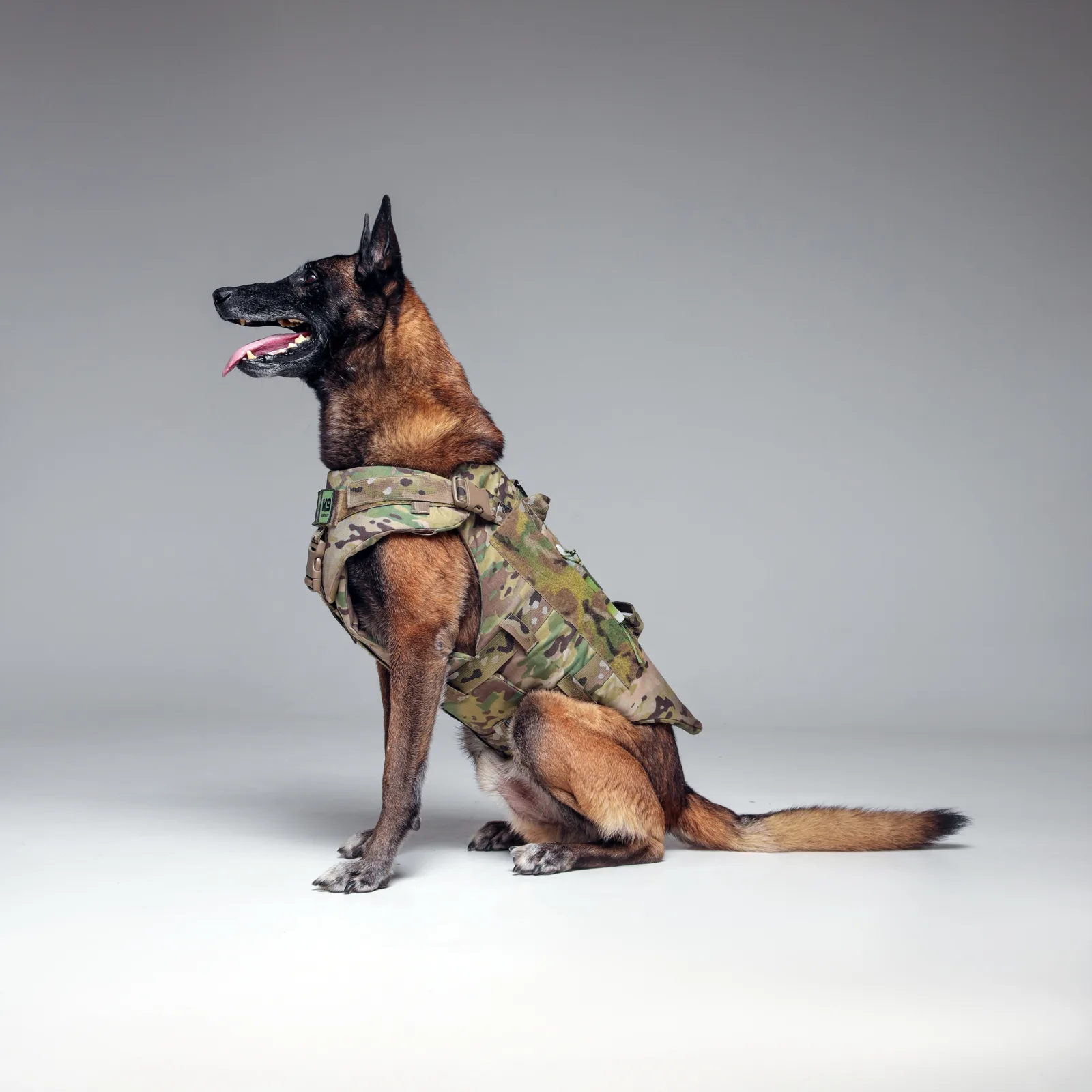
NIJ IIIA Certificate: What Does It Mean for a Dog's Body Armor?
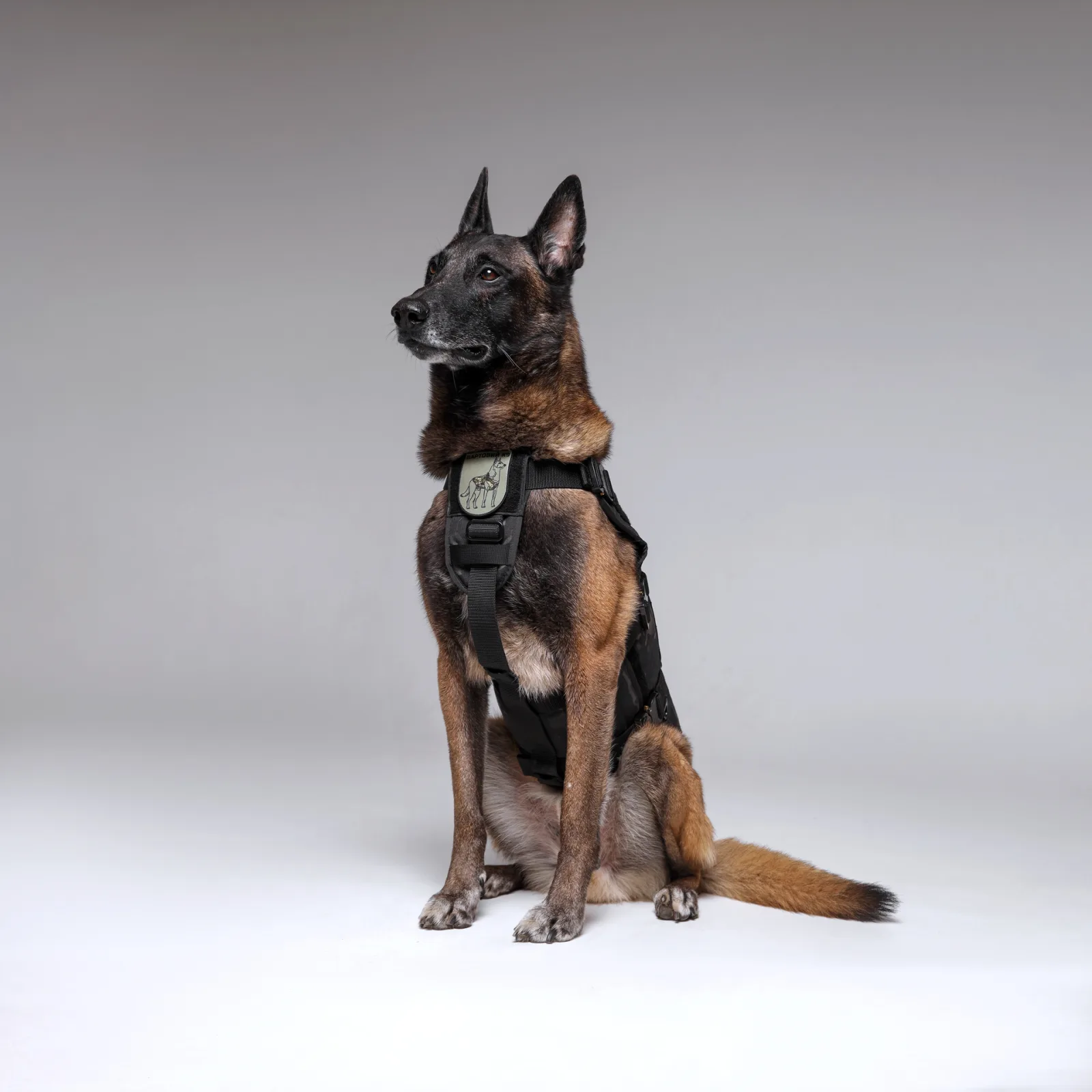
A ballistic standard is a document that specifies which bullets the bulletproof vest protects against and how it is tested. NIJ (National Institute of Justice, USA) is the world's most famous scale of protection classes: levels IIa, II, IIIA stop pistol bullets, and III and IV stop rifle bullets. Ukraine has its own national standard — DSTU 8782:2018, which classifies the means of ballistic protection of domestic production. The Vartoviy K9 body armor is certified according to DSTU 8782:2018 and corresponds to the 1st class of protection: it stops the bullets of 9×18 mm PM/APS and 9×19 mm Luger pistols, and the UHMWPE ballistic panel is additionally antifragile according to the STANAG 2920 (V50) method. In this article, we explain what the NIJ and DSTU classes mean, how they relate, how to read the labeling and why it is worth focusing on the Ukrainian standard, and not on the loud "NIJ IIIA" from marketplaces.
NIJ and DSTU: two standards for the same purpose
Ballistic standards exist so that the buyer can compare the protection objectively rather than according to the seller's words. Both NIJ and DSTU describe the same thing: what ammunition at what speed the panel is obliged to stop, and what residual deformation (injury) is permissible.
NIJ is an American standard that has historically become an international benchmark. DSTU 8782:2018 is the national standard of Ukraine for armored clothing; it is for this standard that domestic products are certified and protection for the needs of the Armed Forces of Ukraine, police and civilians is classified. It is not a “worse” or “better” standard — it is a different class system with its own level logic.
Important: the bulletproof vest "Vartoviy K9" is certified according to DSTU 8782:2018, 1st class. We do not attribute the NIJ IIIA class to the product — these would be two different standards in the same labeling, which is incorrect. Below we compare both scales to make it clear to you where the real protection of the dog's bulletproof vest is.
What is tested during ballistic tests
The methodology is similar in both standards. The ballistic panel is fixed on a special plasticine base (imitation of soft tissues), it is shot with bullets of a given caliber and speed from a fixed distance. The test is considered successful if two conditions are met:
- Non-punching — the bullet does not pass through the panel;
- Permissible depth (BfS) — the deformation of the base does not exceed the maximum permissible (in NIJ — up to 44 mm), because otherwise even without penetration, severe blunt trauma is possible.
For anti-brittle protection, a separate STANAG 2920 technique is used — the speed V50 is determined, at which the panel stops the standard debris simulator with a probability of 50%. It is used to assess the resistance of the "Guard K9" panel to fragments.
Explanation of NIJ classes (for comparison)
The classic NIJ scale according to standard 0101.06 is as follows:
| NIJ Class | Which bullets stops | Threat type |
|---|---|---|
| IIa | 9×19mm FMJ, .40 S&W | pistols, soft panel |
| II | + 9×19 mm at higher speed, .357 Magnum | pistols, soft panel |
| IIIA | + .357 SIG, .44 Magnum | powerful pistols, soft panel |
| III | 7.62×51 mm NATO(rifle) | solid stove, not for dogs |
| IV | armor-piercing rifles (.30-06 AP) | solid stove, for people only |
Classes III and IV are rigid ceramic or polyethylene boards weighing several kilograms. They are unsuitable for a dog: the animal will simply not be able to functionally work, run and maneuver under such a weight. Therefore, dog body armor in the world is always soft pistol classes.
Where in this scale is the bulletproof vest "Vartoviy K9"
Our product is classified according to Ukrainian DSTU 8782:2018 as 1 protection class. In practical terms, this means protection against common pistol threats:
- 9×18 mm PM/APS BULLET (Makarov /Stechkin pistol);
- bullet 9×19 mm Luger (Parabellum);
- anti-wreckage protection according to STANAG 2920 (V50) — from fragments of grenades, mines, IEDs.
That is, according to the logic of threats, the 1st class of DSTU closes the real scenarios in which the service dog finds itself: close pistol fire and, even more importantly for combat conditions, fragmentation damage. If you see NIJ figures, take them as a guide to the type of ammunition, but remember that the official class of our product is determined by DSTU.
What the panel is made of: UHMWPE, not aramid
Ballistic materials are of two main types: aramid (Kevlar, Twaron) and ultra-high molecular weight polyethylene — UHMWPE, aka UHMWPE (Dyneema, Spectra). It is UHMWPE that is used in the bulletproof vest "Vartoviy K9", and this is a conscious choice for a dog:
- Lower weight — UHMWPE is lighter than aramid by 30–40% with the same level of protection, which is critical for the mobility of the animal. The finished bulletproof vest weighs 2.4-2.8 kg.
- Hydrophobicity — unlike aramid, polyethylene does not absorb moisture and does not lose its characteristics from sweat, rain or dirt.
- Stability — the panel does not require a separate moisture-proof seepage, which is washed out over time.
The outer layer of the cover is abrasion resistant fabric Cordura 500D; the product is modular (chest / back with sides / abdomen, optionally removable neck module) and sewn to the size of your dog by individual measures, and not according to the finished S/M/L table. How to take measurements correctly — in the article how to measure a dog for a bulletproof vest.
How to read the label and not buy a fake
Regardless of the standard, the documentation for armor protection must contain specific data. What to look for:
- The name and year of the standard — for our product is DSTU 8782:2018; for imports — NIJ 0101.06 or newer.
- The protection class is by the number or level designation, not the blurry phrases “army level”.
- List of ammunition — from which bullets and at what speed the panel protects.
- Name and contacts of the manufacturer — "Vartoviy K9" (IE Slavinska T. Yu., Kyiv) is a Ukrainian manufacturer, and the product is protected by a patent of Ukraine.
Red flags: "bulletproof vest NIJ IIIA" for ₴8,000, no list of calibers, declared aramid at a suspiciously low price, ready-made size chart instead of tailoring for a dog. Cheap copies often contain only 6–8 layers of fabric without any certification — they can create the illusion of protection, but will not stop the real bullet.
NIJ or DSTU: what to focus on in Ukraine
If you buy equipment for work in Ukraine — for the Armed Forces of Ukraine, the National Police, the SBGS or the departmental canine unit — the national standard DSTU 8782:2018 is the benchmark. It is designed for Ukrainian threats and procedures and is officially recognized in the system. NIJ is useful as an international “ruler” for understanding what the panel protects against, but it is not a Ukrainian supply document.
European counterparts that may occur in imports are VPAM (Germany) and HOSDB/Home Office (UK). They all describe the same physics — just different classes.
For more information on choosing a model, see the guide of the 2026 bulletproof vest buyer, and the certified product itself, see the protection category or on the "Vartoviy K9" bulletproof vest page.
Frequently asked questions
Is the Vartoviy K9 bulletproof vest the NIJ IIIA?
No. The product is certified according to the Ukrainian standard DSTU 8782:2018 and corresponds to the 1st class of protection. NIJ is a separate American standard; we do not attribute our body armor to the NIJ class, because these would be two different classification systems in the same marking. DSTU class 1 protection stops 9×18 mm PM/APS AND 9×19 mm Luger bullets and has anti-fragmentation resistance according to STANAG 2920.
How does DSTU 8782:2018 differ from NIJ?
These are two national standards for armor protection — Ukrainian and American. The test method is similar (firing on a plasticine-based panel with puncture and deformation control), but the class scales and the list of ammunition are different. In Ukraine, the official benchmark for supply is DSTU; NIJ is convenient as an international comparison.
Why don't dogs get NIJ III or IV class body armor?
Classes III and IV stop rifle and armor-piercing bullets, but require rigid slabs weighing several kilograms. A dog under this weight will not be able to move, run and work normally. Therefore, only soft pistol classes are used for animals all over the world — we have class 1 of DSTU.
What material is the ballistic panel made of and how much does it weigh?
The panel is made of ultra-high molecular weight polyethylene (UHMWPE) rather than aramid. It is 30-40% lighter and hydrophobic. The finished body armor weighs 2.4-2.8 kg depending on the size and configuration of the modules.
What is the warranty on the bulletproof vest?
For tailoring and fittings — 12 months, for the ballistic panel — 3 years. The terms and conditions are described on the warranty page.
How to choose the size if there is no S/M/L table?
The body armor is tailor-made to fit your dog — chest girth, neck girth, and back length. This is more accurate than the finished dimensions and ensures a snug fit of the panel. Step-by-step instructions — in the article on how to measure a dog for a bulletproof vest.